Common name: Little Blue Marsh Hawk
Malayalam name: ചെറുവെണ്ണീറൻ
Scientific name: Brachydiplax sobrina Rambur, 1842
Family: Libellulidae
Place of observation: Thumboor & Thommana Kole land, Kerala
Date of observation: Various
| Lestes dorothea male |
| Anal appendages |
![]() |
| Anal appendages |
![]() |
| Thorax dorsal view |
![]() |
| Teneral male |
![]() |
| Newly emerged male & its exuviae |
![]() |
| Thorax of female |
![]() |
| Male |
![]() |
| Mating tandem position |
![]() |
| Mating tandem position |
![]() ![]()
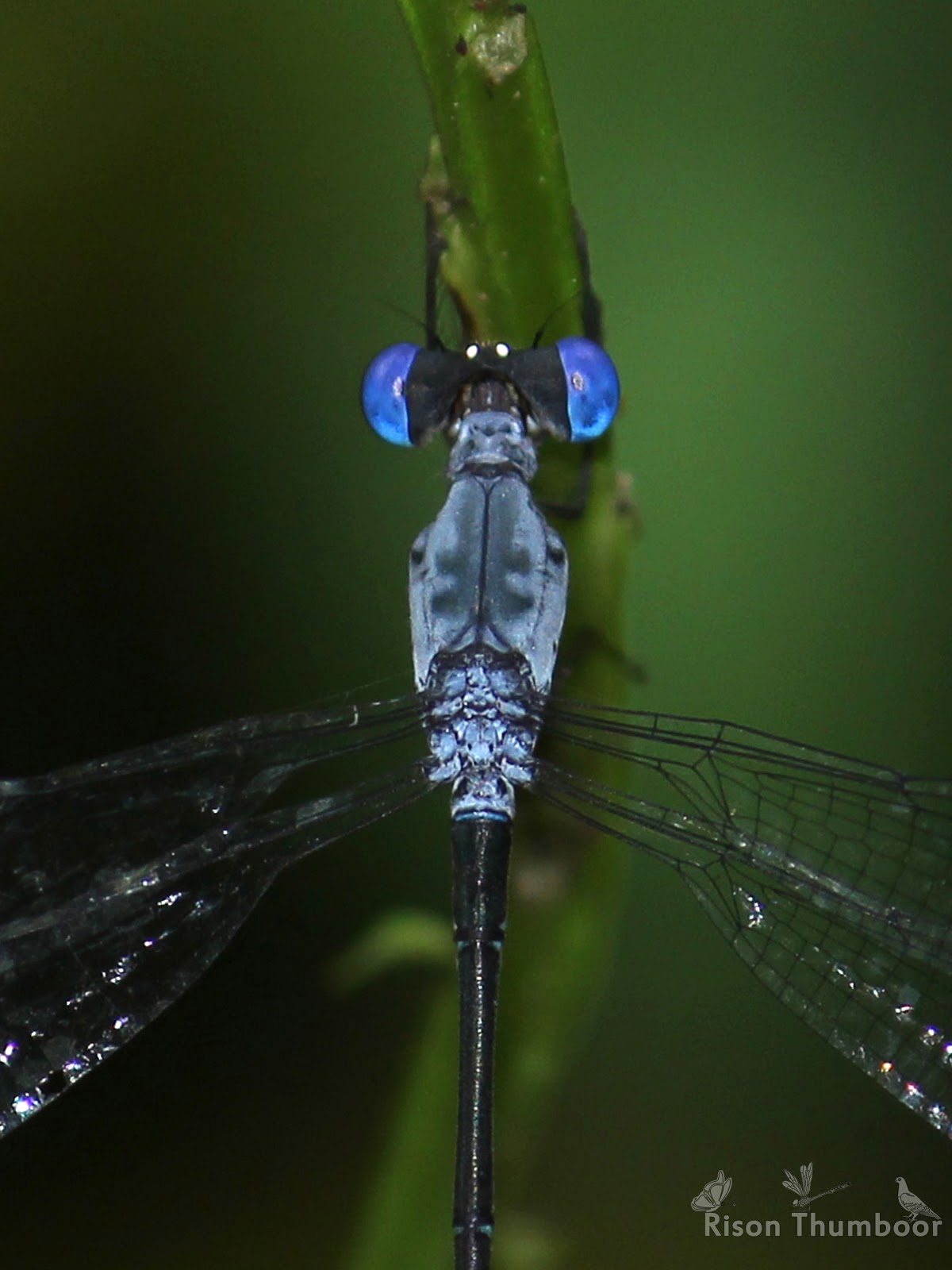
കറുത്ത പുള്ളികളും കലകളുമുള്ള ചേരാചിറകൻ കുടുംബത്തിൽ ഉള്ള ഒരു സൂചിത്തുമ്പിയാണ് Lestes dorothea. ഇന്ത്യ, തായ്ലാന്റ്, മലേഷ്യ എന്നീ രാജ്യങ്ങളിൽ ഇവ കാണപ്പെടുന്നു.
ഇവയ്ക്ക് നീലക്കണ്ണി ചേരാച്ചിറകൻ തുമ്പിയുമായി ഏറെ സാമ്യമുണ്ടെങ്കിലും കുറച്ചുകൂടി വലുപ്പമുണ്ട്. ഇവയുടെ ശിരസ്സിനു കറുപ്പുനിറവും പ്രായപൂർത്തിയായ ആൺതുമ്പികളുടെ കണ്ണുകൾക്ക് നീലനിറവുമാണ്. ഉരസ്സിന്റെ മുതുകുഭാഗത്ത് നീലക്കണ്ണി ചേരാച്ചിറകൻ തുമ്പിക്ക് ഉള്ളതുപോലുള്ള കരിമ്പച്ച നിറത്തിലുള്ള ഒരു പുള്ളിയുണ്ട്. അതിനു താഴെയായി ഇരുവശത്തും കറുപ്പും പച്ചയും കലർന്ന ഓരോ വരകൾകൂടിയുണ്ട്. അതോടൊപ്പം മൂന്നു കറുത്ത പൊട്ടുകളും. നീലക്കണ്ണി ചേരാച്ചിറകൻ തുമ്പിക്ക് ഈ വരകൾ ഇല്ല. പ്രായപൂർത്തിയായ ആൺതുമ്പികളുടെ ഈ കലകളെല്ലാം ഇളം നീലനിറത്തിലുള്ള പൊടികൾകൊണ്ട് മറയ്ക്കപ്പെടും. സുതാര്യമായ ചിറകുകളിൽ കറുത്ത പൊട്ടുകളുണ്ട്. 8, 9, 10 ഖണ്ഡങ്ങൾ കറുപ്പ് നിറമാണ്. പത്താം ഖണ്ഡത്തിന്റെ മുതുകുഭാഗത്തുമാത്രം പ്രായമാകുമ്പോൾ നീലനിറത്തിലുള്ള പൊടികൾകൊണ്ട് മൂടപ്പെടും. നീലക്കണ്ണി ചേരാച്ചിറകൻ തുമ്പിക്ക് ഒൻപതാം ഖണ്ഡത്തിൽ ഇരുവശത്തും നീല കലകൾ ഉണ്ട്. പ്രായമായ ആൺതുമ്പിയുടെ കുറുവാലുകളുടെ മധ്യഭാഗം ഇളം നീല നിറത്തിലും ഇരു അഗ്രങ്ങളും കറുപ്പുനിറത്തിലും ആയിരിക്കും.
Lestes dorothea is a damselfly species in the family Lestidae. It is distributed from the south and northeast India to Thailand and Malaysia.
It is a large damselfly with the male having an abdomen length of 40 mm compared to the similar-looking species, Lestes praemorsus having an abdomen length of 32-35 mm. Its head is black and mature males have deep sapphire-blue eyes as in L. praemorsus. Its thorax is black, pruinosed white laterally, citron-yellow beneath. The dorsum of the thorax is marked with a pair of metallic green antehumeral stripes shaped like those seen in L. praemorsus. The mark on each side is followed by a diffuse black stripe on the humeral suture, a large diffuse black spot just in front of the upper part of the postero-lateral suture, another smaller spot in the middle of the anterolateral suture, and a third spot over the spiracle. L. praemorsus lacks this black stripe; has only several irregular spots present on both sides. The thorax of matured males is heavily pruinosed, obscuring all these markings. Wings are hyaline and pterostigma is black. The abdomen is blue or greenish-blue marked with black. Segment 8 is with a fine basal blue ring, segment 9 entirely black, and segment 10 is black with pruinosed white on the dorsum. In L. praemorsus, segment 9 has very large lateral spots of blue. Anal appendages are bluish during life, broadly black at the base and apex. The female thorax is olivaceous green, pale greenish-yellow laterally. The markings are broader and more visible compared to the males. Anal appendages are small and black in colour. Its much larger size, the absence of markings on segments 8 and 9 in the male, diffuse black stripes on the humeral suture, and higher postnodal index will serve to distinguish it from L. praemorsus. It breeds in well-vegetated temporary ponds and similar habitats.
(Wikipedia) References 1. Subramanian, K.A. (2010). "Lestes dorothea". IUCN Red List of Threatened Species. IUCN. 2010: e.T167323A6328768. Retrieved 2018-07-30. 2. "World Odonata List". Slater Museum of Natural History. Retrieved 2017-03-09. 3. C FC Lt. Fraser (1933). The Fauna of British India, including Ceylon and Burma, Odonata Vol. I. Red Lion Court, Fleet Street, London: Taylor and Francis. pp. 35–36. 4. C FC Lt. Fraser (1924). A Survey of the Odonate (Dragonfly) Fauna of Western India with Special Remarks on the Genera Macromia and Idionyx and Descriptions of Thirty New Species (PDF). Zoological Survey of India. Volumes (Records). pp. 484–485. |
![]() |
| Male |
![]() |
| Female |
![]() |
| Male |
![]() |
| Close up |
![]() |
| Male |
![]() |
| Female |
![]() |
| Female |
![]() |
| Female |
![]() |
| Mating |
![]() |
| Emergence |
| Larva |
![]() |
| Larva |
![]() |
| Newly emerged |
![]() |
| Newly emerged |
![]() |
| Ovipositing |
![]() |
| Ovipositing |
![]() |
| Face |